
Published September 1, 2026
Life by the Water: What It's Really Like to Live in Cherokee County

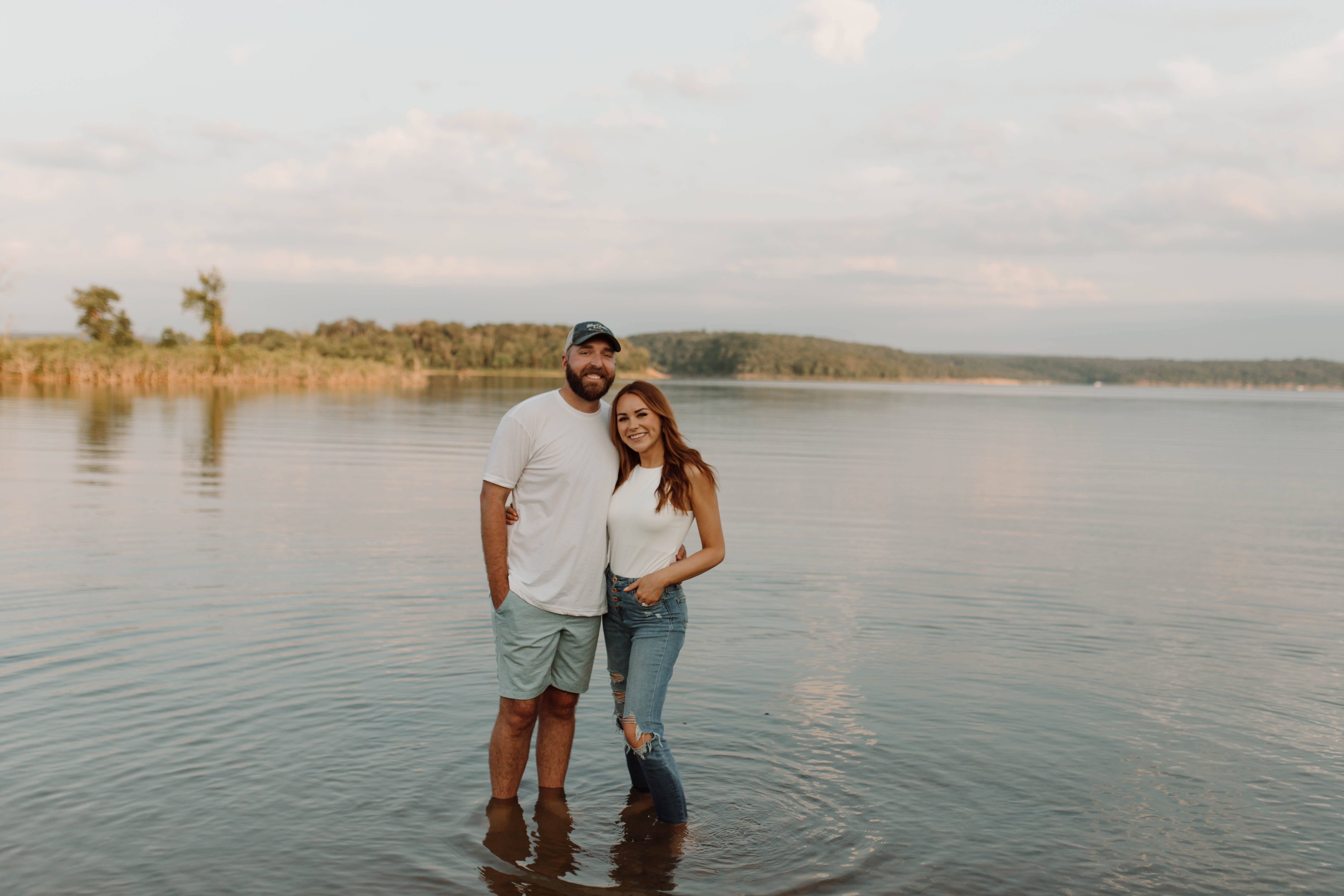
There's a particular kind of quiet you only find in Cherokee County. It's not the absence of anything happening.. it's the sound of a boat idling out of a cove at sunrise, cicadas warming up for the evening, or a paddle dipping into water. If you've never lived somewhere with a lake and a river both close enough to be part of your regular week, it's hard to explain how much that changes the rhythm of everyday life. Around here, it just does.
Tenkiller Doesn't Do Anything Halfway
Lake Tenkiller is the kind of lake that makes people rearrange their weekends around it. Twelve thousand nine hundred acres of water tucked into the Cookson Hills, with more than 130 miles of shoreline and some of the clearest water in Oklahoma.. this isn't a lake you drive past, it's one you plan your life near. Scuba divers come from out of state just to explore the old, flooded town of Cookson beneath the surface. Anglers work the bluffs for bass and the tailwater below the dam for trout. Bald eagles work the shoreline too, if you're patient enough to spot one.
What gets us every time, though, is the bluffs. Tenkiller sits right at the edge of the Ozarks, and the limestone cliffs that drop straight into the water make it feel more like a mountain lake than anything you'd expect to find in eastern Oklahoma. Ten marinas, fourteen parks, two dozen boat ramps—there's no wrong way to spend a Saturday out there, whether that means a pontoon full of people or a kayak and total silence.
The Illinois River Runs on Its Own Schedule
If Tenkiller is where you go to be still, the Illinois River is where you go to move. It's one of the most floated rivers in the country for a reason; a gentle current, a scenic 60-mile stretch through the Cookson Hills, and just enough riffles to keep things interesting without scaring off a family with kids in the boat. Outfitters up and down the river will set you up with a canoe, kayak, or raft and a shuttle back to your car, and from Memorial Day through Labor Day, the sandbars fill up with coolers and lawn chairs like clockwork.
The scenery does a lot of the work. Steep, rocky bluffs. Sycamores and redbuds leaning out over the water. Deer coming down to drink in the early morning if you're floating quiet enough to catch it. And when the summer crowds thin out, the river doesn't close up shop. It just gets peaceful, which honestly might be the better version of it.
The Kind of Small Town That Isn't Trying to Be Anything Else
What ties it all together is Tahlequah itself, sitting at the middle of it. This is the capital of the Cherokee Nation and the United Keetoowah Band, a distinction you feel the moment you're downtown—street signs and storefronts carry the Cherokee syllabary alongside English, and the history here goes back to 1839, when Tahlequah became the seat of a nation rebuilding itself after the Trail of Tears. That heritage isn't tucked away in a museum. It's part of daily life, from the courthouse square to the festivals that fill downtown every year.
Add in Northeastern State University, the oldest institution of higher learning in Oklahoma, and you get a college-town energy layered over small-town familiarity. Around 16,000 people call Tahlequah home, which means you'll run into people you know at the grocery store, but there's still enough going on to keep things interesting.
It's a strange kind of luck, honestly, to have a lake like Tenkiller, a river like the Illinois, and a town with this much history and character all within the same county line. Most places have to pick one thing to be known for. Cherokee County just collects them.

Tyler Shockley
Broker Associate | The Shockley Group
or another way